
Ceramic vs Plastic Media: When to Use Each for Perfect Polished Rocks
Affiliate Disclosure: This post contains affiliate links. If you purchase through these links, I may earn a small commission at no additional cost to you, which helps support the free guides here at The Polished Pebble.
You’ve spent days—perhaps even weeks—patiently waiting for your tumbler to work its magic. You open the barrel, expecting a handful of gleaming treasures, only to find stones with "bruised" edges, tiny chips, or a frustratingly dull finish.
If this sounds familiar, the culprit usually isn't your rocks or your grit; it’s likely your rock tumbling media.
Choosing between ceramic and plastic media is one of those early hurdles that every hobbyist faces. While it feels like a small detail, these "filler" materials are the unsung heroes that protect your stones from crashing into each other during the tumbling process. In this guide, we’ll cut through the confusion and help you decide exactly which one belongs in your barrel for your next project.
The Short Answer: Ceramic vs. Plastic
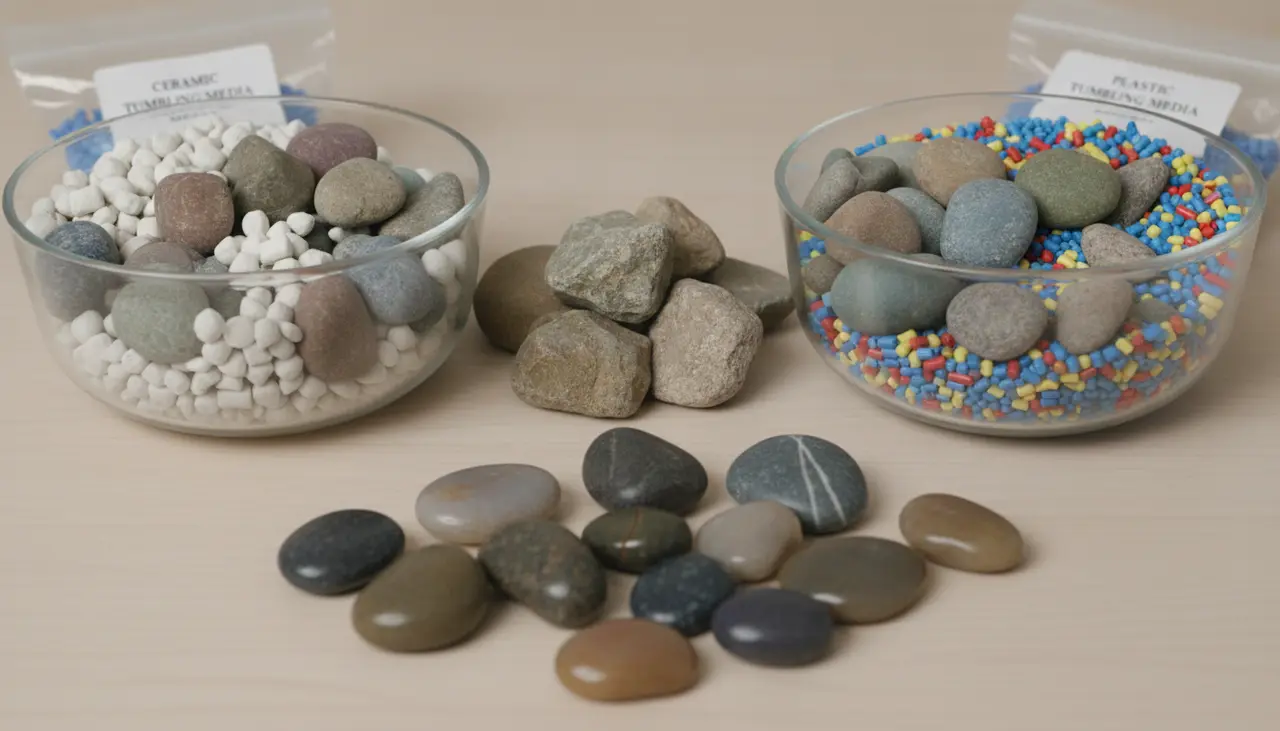
If you are looking for a quick recommendation, here is the rule of thumb: Ceramic media is the versatile workhorse used for volume, grit carrying, and cushioning in all four stages. Plastic media is a specialized tool used primarily for cushioning soft or fragile stones during the final pre-polish and polish stages.
Ceramic is generally preferred by modern hobbyists because it is easier to clean and can be reused across different grit stages. Plastic is budget-friendly and provides a softer "landing" for delicate materials, but it requires more careful management to avoid cross-contamination.
Why Use Rock Tumbling Media at All?
When you start a batch, your barrel should be about 2/3 to 3/4 full. If you don't have enough rocks to reach that level, you need media to fill the space. More importantly, media acts as a "buffer." As the barrel rotates, the media slides between the stones, preventing them from hitting each other with enough force to cause "bruising"—those white, frosted-looking chips on the edges of your finished gems.
Comparison: Ceramic Pellets vs. Plastic Beads
| Feature | Ceramic Media | Plastic Media |
|---|---|---|
| Primary Use | All stages (1-4); filler & abrasion | Stages 3 & 4; cushioning |
| Reusability | Highly reusable; easy to clean | Reusable but "holds" grit |
| Cleaning | Simple rinse | Difficult; must be dedicated to one stage |
| Buoyancy | Sinks (stays mixed with rocks) | Floats (easy to separate) |
| Best For | Agates, Jaspers, Quartz | Glass, Obsidian, Fluorite |
When to Use Ceramic Media
Ceramic media usually comes in small, non-abrasive cylinders or "pins." Because ceramic is hard and dense, it doesn't just cushion; it also helps carry the grit into the tiny nooks and crannies of your stones.
Best for:
- Filling Volume: If you only have half a barrel of rocks, ceramic adds the necessary weight and volume to ensure a proper tumbling action.
- Hard Stones: It is the perfect companion for Agates and Jaspers (Mohs 6.5-7).
- Efficiency: Unlike plastic, ceramic doesn't "absorb" grit. You can wash it thoroughly and move it from Stage 1 all the way to Stage 4.
If you are just starting out and following The 4 Stages of Grit: A Simple Guide to Professional Rock Polishing, I highly recommend starting with a variety pack of ceramic cylinders. They are the most "forgiving" media for a busy hobbyist.
When to Use Plastic Media
Plastic pellets are lightweight and provide a very soft, pillowy environment. However, they come with a catch: plastic is porous. Once you use a plastic pellet in Stage 1 (coarse grit), tiny particles of that grit get embedded in the plastic. No matter how much you wash it, that coarse grit will stay there.
Best for:
- Fragile Materials: If you are learning how to tumble glass or working with soft stones like Fluorite, plastic provides the ultimate cushion.
- Final Polish: Some hobbyists swear by plastic in the final stage to achieve that elusive mirror-like shine on obsidian or Apache Tears.
Pro-Tip: If you use plastic, you must have separate bags for each stage. Label one bag "Stage 3" and another "Stage 4." Never mix them, or you’ll scratch your rocks in the final polish!
Common Beginner Mistakes to Avoid
- Mixing Plastic Stages: As mentioned, never move plastic pellets from a coarse stage to a finer stage. This is the #1 cause of "mystery scratches" on finished rocks.
- Using Too Little Media: If you hear a loud "clunking" sound in your tumbler, you don't have enough media. It should sound like a gentle, rhythmic sliding of gravel.
- Forgetting the "Float" Test: When cleaning plastic media, it floats! This makes it easy to skim off the top of your bucket, but be careful not to let it wash down your household drain, as it will cause major plumbing clogs.
- Skipping Media with Large Stones: Even if your barrel is 3/4 full of large rocks, you still need small ceramic media to fill the "voids" between them. Think of it like packing peanuts for your gems.
Which Should You Buy First?
For most beginners using a standard rotary tumbler—like those mentioned in The Polished Pebble Master Buying Guide—I recommend Ceramic Media.
It’s simply more practical for a busy schedule. You can rinse the whole batch in a colander, ceramic and all, and move to the next stage without worrying about dedicated storage bags or grit contamination. Save the plastic media for when you decide to tackle more "finicky" stones like Obsidian or sea glass.
Frequently Asked Questions (FAQ)
Can I mix ceramic and plastic media in the same batch? It is generally not recommended. They have different weights and densities, which can disrupt the tumbling action and make cleaning a nightmare. Stick to one or the other for a single batch.
How long does rock tumbling media last? Ceramic media will slowly wear down over many months of use. Once the cylinders become very small or thin, they may get stuck in the holes of your colander—that’s when it’s time to replace them. Plastic media lasts a long time but should be discarded if it becomes visibly jagged or dirty.
Does media change the tumbling time? Not significantly, but it does make the process more efficient. By helping the grit reach the entire surface area of the stone, you may find your "shaping" phase (Stage 1) goes a bit smoother.
Where can I buy bulk media? You can find high-quality, non-abrasive ceramic pellets and plastic beads in bulk on Amazon or through specialty lapidary shops. Look for "large ceramic cylinders" for Stage 1 and "small ceramic pins" for the polishing stages to ensure every surface is reached.