
Identifying Your Rocks: Is it Hard Enough to Tumble?
Affiliate Disclosure: This post contains affiliate links. If you purchase a product through one of these links, I may earn a small commission at no extra cost to you. I only recommend tools and supplies that help you achieve the best results in your lapidary journey.
The Quick Answer: Can I Tumble This Rock?
To determine if a rock is suitable for tumbling, it generally needs a Mohs hardness rating of 5 to 7. A good rule of thumb is the "Steel Nail Test": if you can scratch the rock with a common steel nail, it is likely too soft for a standard tumbling cycle and may dissolve or turn into "mud" alongside harder stones.
For the best results, you should only tumble rocks of the same hardness together. Mixing a soft stone (like Calcite) with a hard stone (like Agate) will result in the softer stone being ground away completely before the harder stone even begins to smooth out.
The Heartbreak of the "Disappearing Rock"
We’ve all been there. You’re walking along a riverbed or a beach, and you spot a stone that looks absolutely stunning when it’s wet. You bring it home, wait weeks for it to finish the coarse grind, only to open the barrel and find... nothing. Or perhaps just a few small, pitted pebbles and a lot of thick, gray sludge.
This guide is for the hobbyist who wants to stop guessing and start tumbling with confidence. Whether you’re balancing a 9-to-5 or managing a busy household, your time is precious. Understanding the "why" behind stone hardness ensures that the weeks your tumbler spends humming in the garage result in treasures, not disappointment.
Understanding the Mohs Scale (Without the Science Degree)
In the world of rock tumbling, the Mohs Scale of Mineral Hardness is your best friend. It’s a simple 1 to 10 scale that ranks minerals based on their ability to scratch one another.
- Mohs 1-4: Very soft (Talcs, Calcites, Fluorite). These usually require advanced "dry tumbling" methods or very specific vibratory cycles. In a standard rotary tumbler, they often vanish.
- Mohs 5-6: Medium hardness (Obsidian, Glass, some Feldspars). These can be tumbled but are prone to bruising and require lots of cushioning.
- Mohs 7: The "Sweet Spot" (Quartz, Agate, Jasper, Chert). These are the hobbyist's favorites. They are durable, take a high glass-like polish, and are very forgiving.
- Mohs 8-10: Very hard (Topaz, Corundum, Diamond). These require specialized diamond abrasives and much longer run times.
Common Stones: Hardness Comparison Table
Before you load your barrel, use this table to see if your finds are compatible.
| Rock Type | Estimated Mohs Hardness | Tumbling Suitability | Best For... |
|---|---|---|---|
| Agate / Jasper | 6.5 – 7 | Excellent | Beginners and professional-grade shine. |
| Quartz (Rose, Smoky) | 7 | Excellent | High-gloss finish, very durable. |
| Petrified Wood | 6.5 – 7 | Great | Preserving organic textures in stone. |
| Obsidian | 5 – 5.5 | Moderate | Experienced tumblers (prone to chipping). |
| Sodalite | 5.5 – 6 | Moderate | Beautiful color, but needs extra cushioning. |
| Fluorite | 4 | Poor | Advanced users only; often crumbles. |
| Limestone | 3 – 4 | Avoid | Will likely dissolve into mud. |
How to Perform a DIY Scratch Test
You don't need a laboratory to test your rocks. You can use common household items to get a ballpark idea of where your stone sits on the scale.
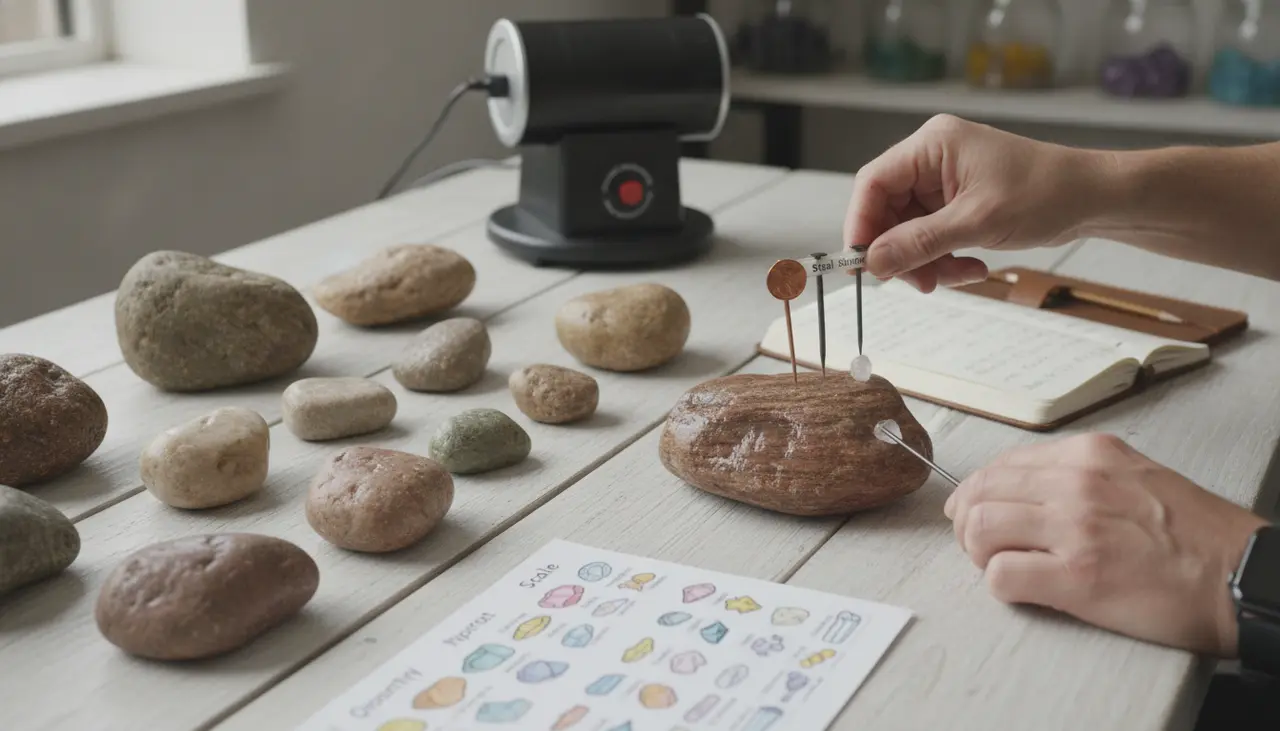
- The Fingernail Test (Hardness ~2.5): If your fingernail can scratch the rock, it’s too soft. Leave it on the shelf as a "specimen" rather than tumbling it.
- The Copper Penny Test (Hardness ~3): Try to scratch the rock with a penny. If the penny leaves a mark, the rock is still too soft.
- The Steel Nail/Pocket Knife Test (Hardness ~5.5): This is the most important test. If a steel nail cannot scratch your rock, you are likely dealing with a member of the Quartz family (Hardness 7). This rock is a prime candidate for tumbling!
Pro Tip: If you want to be precise, I highly recommend picking up a Mohs Hardness Testing Kit. These kits come with calibrated "picks" that allow you to identify the exact hardness of a mystery stone, saving you weeks of wasted tumbling time.
Why Hardness Matters for Your Grit
Once you’ve identified that your rocks are hard enough to tumble, you need to ensure you’re using the right process. Harder rocks like Agates require more time in the coarse stage to shape.
If you are unsure how the hardness of your stone affects the actual tumbling steps, check out our guide on The 4 Stages of Grit: A Simple Guide to Professional Rock Polishing. It explains how the silicon carbide grit interacts with different stone surfaces to bring out that final glow.
Beginner Mistakes to Avoid
- The "Mixed Bag" Error: Never mix rocks with a hardness difference of more than 1 point. A Mohs 7 Jasper will "eat" a Mohs 5 Obsidian during the tumbling process.
- Ignoring Texture: Even if a rock is hard, if it is "vuggy" (full of tiny holes or pits), it will trap grit. This grit will then leak out in the final stage and scratch your polish.
- Skipping the Test: Always test a "mystery rock" from the backyard before adding it to a batch of expensive rough you purchased online.
Frequently Asked Questions
Can I tumble rocks I found at the beach? Yes! Beach rocks are often already pre-tumbled by the ocean. They usually have a hardness of 6-7 because the softer rocks have already been destroyed by the surf. However, always perform the steel nail test to be sure.
What happens if I tumble soft rocks anyway? They will lose volume very quickly. What started as a 2-inch stone might come out as a 1/2-inch pebble after just one week. They also tend to create a very thick slurry that can cushion the other rocks too much, preventing them from being polished.
Do I need a different tumbler for soft rocks? While you can use a rotary tumbler for softer stones by adding plenty of ceramic media and shortening the cycles, many hobbyists prefer a vibratory tumbler for softer materials like Malachite or Fluorite, as it is a much gentler process. If you're still deciding on your first machine, take a look at The Polished Pebble Master Buying Guide: Choosing Your First Rock Tumbler for a breakdown of which machine suits your favorite stone types.
Final Thoughts
Rock tumbling is a lesson in patience and discovery. By taking five minutes to test your stones before you start the motor, you’re honoring the time and effort you put into this beautiful hobby. Remember: when in doubt, scratch it out! If that steel nail slides right off, you’re on your way to a batch of stunning, polished gems.