
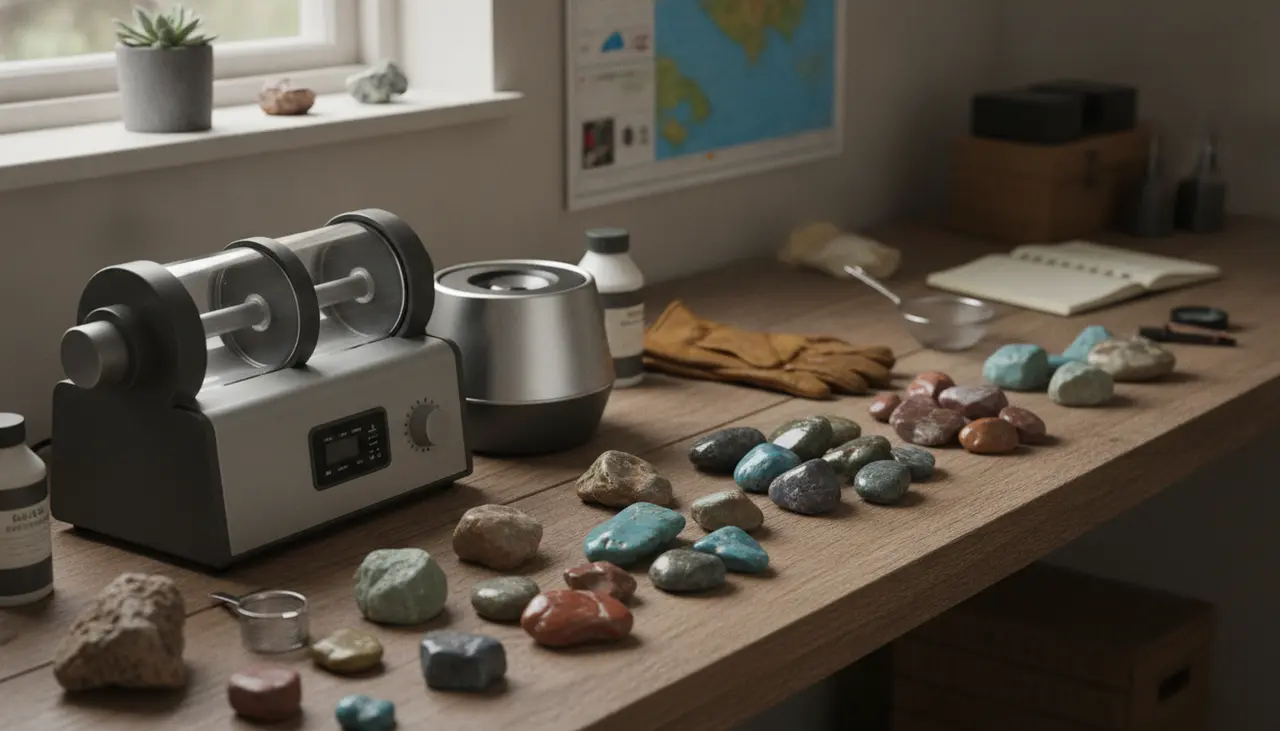
The Polished Pebble Master Buying Guide: Choosing Your First Rock Tumbler
Affiliate Disclosure: This guide contains affiliate links. If you purchase through these links, The Polished Pebble may earn a small commission at no extra cost to you. We only recommend equipment and supplies relevant to the hobbyist rock tumbling community.
Choosing your first rock tumbler is the first step in a deeply rewarding, slow-burn hobby that turns "ordinary" stones into extraordinary keepsakes. For the busy adult, the right equipment should fit seamlessly into your home environment, offering a meditative escape rather than a technical headache.
The Short Answer: Which Tumbler Should You Buy? For most beginners, a high-quality rotary tumbler is the best starting point. Models like the Lortone 3A or the Thumler’s Tumbler Model T are industry standards because they are durable, relatively quiet, and produce the classic rounded, "sea glass" aesthetic most hobbyists crave. If your primary goal is to polish pre-shaped stones or keep the natural geometry of a crystal while working faster, a vibratory tumbler is the preferred secondary tool.
Who This Guide Is For
This guide is designed for the creative enthusiast who values the "slow-process" reward. You likely have a full schedule and want a hobby that works in the background while you focus on life. You aren't looking to start a commercial mining operation; you want to turn a handful of Jasper or Agate found on a weekend hike into something beautiful for your desk or a simple jewelry project.
Understanding the Two Main Technologies
Before you click "buy," it is essential to understand the two different ways rocks are polished.
| Feature | Rotary Tumblers | Vibratory Tumblers |
|---|---|---|
| Action | Tumbles rocks in a rotating barrel. | Vibrates the load at high speeds. |
| Visual Result | Rounds off sharp edges; creates smooth pebbles. | Preserves the original shape of the stone. |
| Timeframe | 4 to 6 weeks for a full cycle. | 1 to 2 weeks for a full cycle. |
| Noise Level | Low, rhythmic "sloshing" (especially with rubber barrels). | Higher-pitched hum/buzz. |
| Best For | Beginners, rough field-picked stones. | Advanced users, polishing delicate shapes. |
Key Factors to Consider Before Purchasing
1. Barrel Capacity: Single vs. Double
If you are just starting, a 3lb single barrel tumbler is the "sweet spot." It is large enough to hold a variety of stone sizes but small enough to manage easily in a kitchen or utility room. Double barrel models (like the Lortone 3-1.5) allow you to run two different stages at once—for example, one barrel doing the initial coarse grind while the other is in the final polish phase. This is a great "efficiency hack" for hobbyists with limited free time.
2. Noise and Location
Rock tumbling is a 24/7 process. If you live in an apartment, look specifically for professional-grade rubber barrels. These significantly muffle the sound of stones hitting the sides compared to cheaper plastic barrels found in "toy" kits. Brands like Lortone and Thumler's are renowned for their quiet, long-lasting motors.
3. Durability and Parts
Avoid "toy" tumblers with plastic gears. Rock tumbling involves heavy loads and constant friction. A hobby-grade tumbler with a metal frame and a belt-driven motor will last for decades. Furthermore, choosing a well-known brand ensures you can easily find replacement belts or barrels years down the road.
Essential Supplies: The "Starter Kit" Beyond the Machine
A tumbler alone won't get you to a mirror shine. You will also need to budget for:
- Silicon Carbide Grit: Usually comes in a 4-stage kit (Coarse, Medium, Fine, and Pre-Polish).
- Polishing Compound: Cerium Oxide or Aluminum Oxide are the gold standards for achieving that final high-gloss "wet look."
- Tumbling Media: Ceramic pellets are essential for cushioning stones and carrying grit into small crevices, while plastic pellets are excellent for the final polishing stages to prevent bruising.
- Rough Material: If you don't have a backyard full of rocks, you can purchase "rough" mixes of Agate, Jasper, or Quartz.
Beginner Mistakes to Avoid
- Mixing Hardness Levels: Never tumble soft stones (like Fluorite) with hard stones (like Agate). The hard stones will simply "eat" the soft ones. Always check the Mohs Hardness Scale before starting a batch.
- The Household Drain Trap: Never, ever pour used grit slurry down your sink. It is essentially liquid rock and will harden in your pipes like concrete. Always use a bucket and dispose of the waste outdoors.
- Overfilling or Underfilling: Your barrel should be between 2/3 and 3/4 full. Too full, and the rocks won't tumble; too empty, and they will smash against each other and crack.
- Skipping the Cleaning Phase: Even a single grain of coarse grit left in the barrel during the final polish stage can ruin the entire batch by scratching the stones.
Practical Checklist for Your First Order
- The Machine: A 3lb Rotary Tumbler (Lortone 3A or similar).
- The Grit: A 4-stage Silicon Carbide and Aluminum Oxide kit.
- The Media: 1lb of small ceramic cylinders.
- The Rocks: A 1lb bag of "Rough Madagascar Mix" (usually high in Agate and Jasper, which are beginner-friendly).
- The Safety Gear: A simple colander (not used for food) and a plastic bucket.
Frequently Asked Questions
Is rock tumbling expensive to run? The electricity cost is negligible—usually similar to a small LED light bulb. The primary ongoing costs are grit and media.
How long does it take to see results? Patience is the core of this hobby. A typical rotary cycle takes about a month. However, checking the barrel once a week to see the transformation is part of the meditative joy.
Can I tumble rocks I find in my driveway? Absolutely! In fact, that is how most of us start. Just ensure they are of similar hardness (the "scratch test" is a great way to check this).
In the coming weeks, we will dive deeper into specific Grit & Media reviews and provide detailed Stone Identification guides to help you make the most of your new equipment. For now, focus on choosing a sturdy machine that will be your partner in this slow, beautiful process of discovery.
Related product: Hobbyist rock tumbling and lapid...