
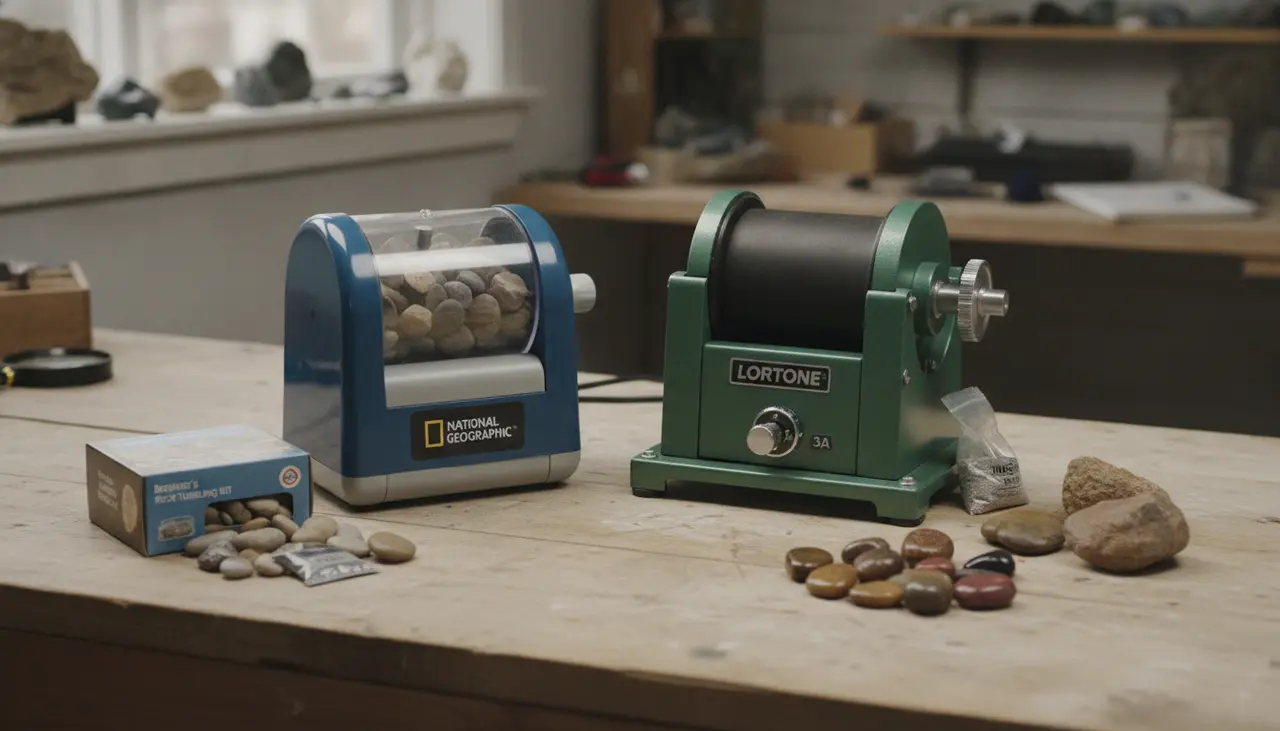
National Geographic vs Lortone: Which Rock Tumbler Wins for Beginners?
Affiliate Disclosure: This post contains affiliate links. If you purchase through these links, The Polished Pebble may earn a small commission at no extra cost to you. We only recommend products we trust for our own tumbling projects.
The Short Answer: Which Tumbler Should You Choose?
If you are looking for a quick, all-in-one entry into the hobby and don't mind a bit of noise, the National Geographic Professional Rock Tumbler is the winner. It is widely available, includes everything you need to start immediately, and features a faster motor that produces results in less time.
However, if you are looking for a "forever" machine that is whisper-quiet and produces professional-grade results through a slower, more traditional process, the Lortone 3A is the undisputed champion. While it requires a separate purchase of grit and stones, its durability and consistent performance make it the gold standard for serious hobbyists.
Choosing Your First Companion in the Craft
Starting your journey into rock tumbling is an exercise in patience and discovery. There is something deeply meditative about hearing the rhythmic hum of a tumbler in the background, knowing that inside, nature is being polished into something spectacular.
But before you can see that first shine, you face a common crossroads: do you go with the household name you see in every hobby shop (National Geographic), or do you invest in the industrial-looking classic recommended by seasoned lapidary enthusiasts (Lortone)?
This guide is for the busy adult who wants to ensure their investment matches their lifestyle. Whether you want a fun project to share with the family or a quiet, reliable machine that fits into a small apartment, we’ve broken down the trade-offs between these two popular brands.
Comparison at a Glance
| Feature | National Geographic (Professional) | Lortone 3A |
|---|---|---|
| Barrel Material | Thick Rubber | High-Quality Molded Rubber |
| Motor Speed | Variable (3 Speeds) | Single (Slow & Steady) |
| Noise Level | Moderate | Very Quiet |
| Included Supplies | Rough stones, grit, jewelry fastenings | Tumbler only (usually) |
| Longevity | 1-3 years (average hobby use) | 10-20+ years (with maintenance) |
| Best For | Fast results & beginners | Long-term hobbyists & quiet homes |
The National Geographic Professional: The High-Speed Starter
The National Geographic rock tumbler review usually starts with one word: accessibility. This machine is designed to get you from "rough stone" to "polished gem" as quickly as possible.
Why it’s great for beginners:
- The All-In-One Box: You don't have to worry about identifying your rocks or sourcing grit immediately. It comes with a variety of rough stones (usually jaspers and agates) and pre-measured grit packets.
- Speed Settings: It features a timer and three speed settings. For those with a busy schedule, the ability to set the machine to turn off automatically is a nice safety feature.
- Warranty: National Geographic is known for excellent customer service and a 100% satisfaction guarantee, which is reassuring when you’re just starting out.
The Trade-offs: The motor on the National Geographic models runs significantly faster than traditional lapidary equipment. While this speeds up the "grinding" phase, it can sometimes lead to "bruising" on softer stones. Because the barrel is plastic-capped rubber, it can also be a bit noisier than the Lortone.
The Lortone 3A: The Professional’s Workhorse
Lortone has been the backbone of the hobbyist lapidary world for decades. The 3A model is a simple, heavy-duty machine that focuses on doing one thing perfectly: tumbling rocks slowly and quietly.
Why it’s the hobbyist favorite:
- Whisper-Quiet Operation: The Lortone 3A is remarkably quiet. If you live in an apartment or plan to run your tumbler in a utility room near your living space, this is a massive advantage.
- Built to Last: These machines are made of metal and high-grade rubber. It is not uncommon to find Lortone tumblers from the 1970s still running perfectly today with just a drop of oil now and then.
- Superior Results: By tumbling at a slower, consistent RPM, the Lortone 3A treats the stones more gently. This is essential if you want to master the 4 stages of grit to achieve a true mirror-like finish.
The Trade-offs: Lortone tumblers are often sold as "bare" machines. You will need to purchase your rough stones and grit separately. It also lacks a timer, meaning you’ll need to manually check your rocks every week—though for many, this check-in is the most rewarding part of the hobby.
Which One is "Best For You"?
The "Busy Family" Choice: National Geographic
If you are buying this as a gift or a project to do with children, or if you just want to see if the hobby "sticks" without a large upfront search for supplies, start here. It's a low-barrier entry that provides instant gratification.
The "Meditative Hobbyist" Choice: Lortone 3A
If you appreciate high-quality tools and want a machine that will grow with you as you learn more advanced techniques, the Lortone is worth the extra effort. It is a tool for someone who views rock tumbling as a long-term, relaxing craft rather than a one-off experiment.
Common Beginner Mistakes to Avoid
Regardless of which machine you choose, keep these tips in mind to ensure your first batch is a success:
- Never Pour Slurry Down the Drain: The "mud" created during tumbling (grit plus rock dust) will harden like concrete in your pipes. Always rinse your rocks into a bucket and dispose of the sediment in the trash or garden.
- Don't Overfill (or Underfill): Most barrels perform best when they are 2/3 to 3/4 full. If it's too empty, the rocks will crash and chip; if it's too full, they won't tumble and grind properly.
- The Cleaning Phase: Between each grit stage, you must clean the barrel and the rocks perfectly. A single grain of coarse grit left behind during the polishing stage will scratch every rock in the batch.
- Checking Hardness: Before you start, make sure you aren't mixing soft stones with hard ones. You can learn more about this in our Master Buying Guide: Choosing Your First Rock Tumbler.
Frequently Asked Questions
Is the National Geographic tumbler too loud for an apartment? It is louder than a Lortone, but many users find that placing it inside a cardboard box or on a thick rubber mat significantly muffles the sound.
Can I use Lortone grit in a National Geographic tumbler? Yes! In fact, many people find that using professional-grade Silicon Carbide grit in their National Geographic machine produces better results than the packets included in the box.
How long does the process take? With a National Geographic tumbler on high speed, you might finish a batch in 3 weeks. With a Lortone, expect a full cycle to take 4 to 6 weeks. Remember, in this hobby, slower usually means a better shine!
Where can I buy replacement parts? Lortone parts (like belts and barrels) are widely available through lapidary supply shops. National Geographic parts are usually handled through their customer service or Amazon.